
G-Cap 500
Building with the best
Top crypto and biotech players are backing projects in the MatDAO ecosystem.

.png)
.png)
.png)
Description
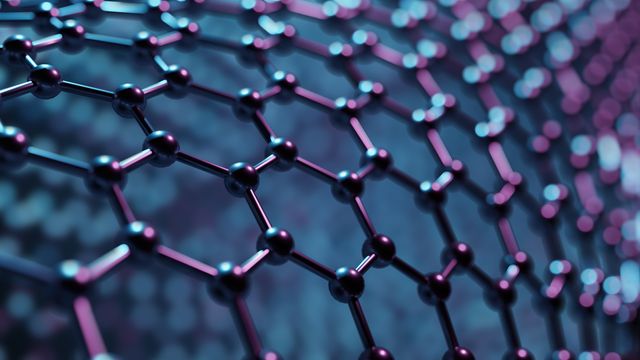
G-Cap 500 represents a breakthrough in energy storage through Vertically Aligned Graphene Array (VAGA) technology, designed to solve the two major bottlenecks of today's Li-ion batteries: slow charging and short lifespan.
Thanks to graphene's status as one of the most electrically conductive materials in the world, G-Cap 500 can absorb extremely high current instantaneously. This enables 0-80% charging in just 5 minutes (compared to 1-2 hours for conventional Li-ion batteries) and delivers a lifespan 10-50 times longer than standard batteries.
This technology is not intended to completely replace Li-ion batteries, but rather to fill critical market gaps where ultra-fast charging and emergency power are essential—such as electric buses that recharge at terminals, cargo delivery drones, and AI-grade data center UPS systems requiring immediate high-power backup.
Material Advantage
Extreme Fast Charging (XFC): Charges to near-full capacity in minutes, not hours, dramatically reducing vehicle downtime in commercial operations.
Ultra-Long Cycle Life: Supports over 100,000 charge cycles (compared to ~2,000 cycles for typical Li-ion batteries), effectively eliminating the need for battery replacement over a vehicle's lifetime and significantly reducing total cost of ownership (TCO).
High Power Density: Exceptional capability to deliver high burst power, ideal for heavy-duty vehicle acceleration and instant emergency power supply applications.
Wide Temperature Range: Operates reliably under extreme conditions from -40°C to +65°C, with minimal performance degradation.
Technical Specifications
Energy Density
180 Wh/kg
Power Density
15,000 W/kg
Cycle Life
>100,000 cycles
Charge Time
0-80% in 5 minutes
Operating Temperature
-40°C to +65°C
Market Applications
Development Timeline
Lab Validation
Q1 2024
Prototype Development
Q3 2024
Pilot Testing
Q1 2025
Commercial Scale-Up
Q4 2025
Research Team
Prof. Dr. Arnon Jenkins
Principal Investigator
MIT
Dr. Sarah Chen
Materials Engineer
MIT
Dr. Michael Torres
Electrical Engineer
Stanford
Risk Factors
Scale-up manufacturing challenges for VAGA production
Competition from established battery manufacturers
Regulatory certification requirements for energy storage systems
Supply chain dependencies for graphene materials
Competitive Advantage
Proprietary VAGA manufacturing process with 3 patents filed
10x faster charging than any commercially available solution
50x longer cycle life than conventional Li-ion batteries
Lower total cost of ownership over product lifetime
Intellectual Property Status
Patents Filed
3 US patent applications filed covering VAGA structure, manufacturing process, and integration methods
Funding & Milestones
Funding and milestone management features will be available after smart contract deployment.
Phase 1 Lab Results.pdf
Chula TTO Commercialization Strategy.pdf
Patent Filing - Biochar Process.pdf
Technical Specifications v2.0.pdf
Legal Agreement Hash
0x7f83b1657ff1fc53b92dc18148a1d65dfc2d4b1fa3d677284addd200126d9069This SHA-256 hash cryptographically binds the IP-NFT to the physical Intellectual Property Assignment Agreement (IPAA) filed with Chula TTO, making the token represent legally enforceable commercial rights.
Enterprise Sub-Licenses
| Licensee | Expires Block | Terms Hash | Status |
|---|---|---|---|
| 0x7099...79C8 | #12345678 | 0x8a1b2c3d... | Active |
Enterprise sub-licenses demonstrate successful "Research-to-Commercialization" (R2C) achievement, proving the asset has transitioned from academic research to commercial application.
Legal Innovation: MatDAO uses cryptographic document hashing to physically bind real-world patent agreements to smart contracts, ensuring tokens represent legally enforceable commercial rights.